An athlete's fluid plan is usually built in training and applied on game day. The two settings differ enough that the plan frequently fails at the point it matters.
Access to fluid is not the same
Practice allows drinking almost whenever the athlete wants. Bottles sit at the edge of the field and breaks are frequent and flexible.
Competition restricts intake to specific moments determined by the rules: timeouts, quarter breaks, substitutions or stoppages that may not come when needed.
That means the total opportunity to drink can be much lower during a game than during a session of comparable length, regardless of what the athlete intends.
Intensity is distributed differently
Practices include instruction, walkthroughs and periods of standing, which lowers average intensity across the session.
Games remove most of that. The work rate for a starter is higher and more sustained, which raises heat production and sweat rate for the same clock time.
Sweat rate measured in training therefore underestimates competition losses, which is why teams measure on game days separately where they can.
Clothing and conditions change
Athletes often train in lighter kit than they compete in, and full uniforms reduce evaporation from the skin.
Timing differs too. Practice may sit in a cooler part of the day, while a game is scheduled for broadcast or attendance rather than for weather.
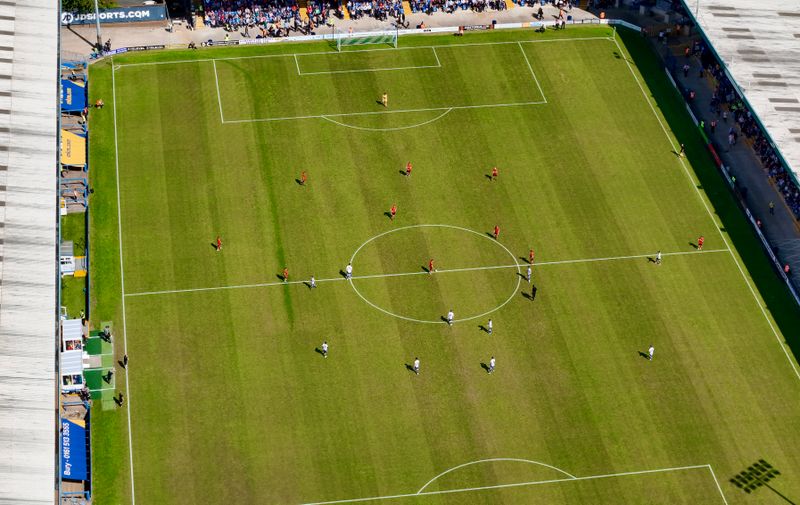
Stadium environments add their own effects, since a full crowd, artificial surfaces and stadium walls all raise the temperature at field level above the forecast.
Nerves and gut tolerance
Competition changes digestion. Blood is redirected, gastric emptying slows and athletes who tolerate fluid easily in training sometimes cannot on game day.
The practical response is rehearsal, since the gut adapts to what it is regularly asked to handle. Practicing intake at competition volumes is part of preparing the athlete.
Pre-game intake matters more for the same reason. Arriving well hydrated reduces how much has to be taken in during a period when tolerance is lowest.
The substitutes and the starters diverge
A squad does not experience the same game. Starters playing the full contest and a substitute entering late have entirely different fluid demands.
Athletes waiting to enter often lose fluid while warming up repeatedly, without the drinking prompts that in-game play provides at stoppages.
Which is why individual plans are more useful than team-wide instructions in competition. The single message that works for a whole practice group stops fitting once roles diverge.