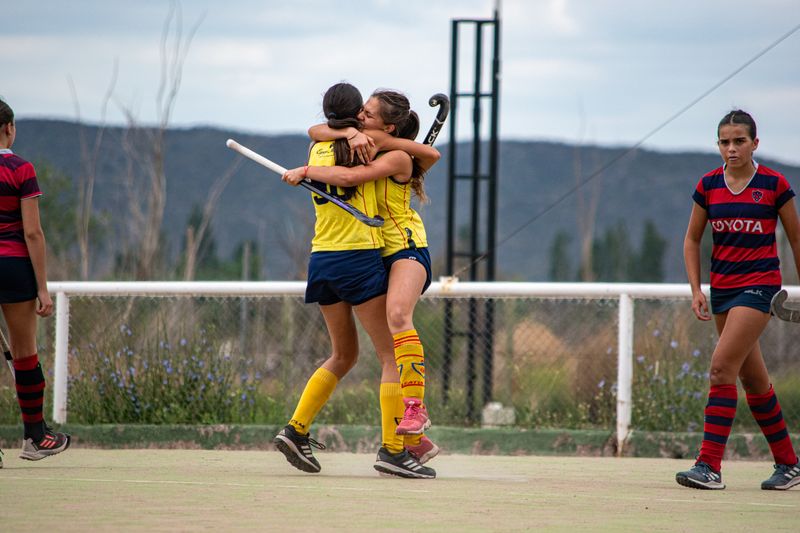
Jumper's knee is produced by the deceleration phase, where the tendon absorbs far more force than it ever generates going up.
The patellar tendon breaks down on the landings, not the jumps

Count the jumps in a volleyball session and you have counted the wrong event twice. Every jump has a takeoff and a landing, and it is the landing that does the damage, by a margin that is not close.
Going up, the quadriceps shorten and the tendon transmits the force they produce. Coming down, the same muscle group is lengthening under load while absorbing the athlete's kinetic energy, and the peak force through the tendon in that phase is substantially higher than anything produced on the way up. The tissue is being stretched hard, quickly, in a position of deep knee flexion, and stress concentrates at the attachment to the lower pole of the kneecap. Which is exactly where the pain of patellar tendinopathy sits, in almost every case, at a point you can cover with a fingertip.
Two things make the landing worse and they are both trainable. A stiff landing with a shallow knee angle absorbs the energy over a short distance and raises the peak force. And landing with the shin driving forward increases the compressive component at the tendon's attachment as well as the tensile one, which is a different and less forgiving type of load.
The training implication is that jump count is a poor exposure measure unless you know how the athlete came down, and a fatigued athlete lands differently to a fresh one. Late in a session the knee flexes less, the ankle contributes less, and the tendon takes a larger share of a force that has not diminished. So the last twenty jumps of a session are not equivalent to the first twenty, and if you are going to cap anything, cap the tail.
This also explains why an athlete's symptoms often track the surface and the shoe. Harder floors return more energy and demand faster absorption.
I would add a heretical note about rest as treatment, since a tendon that is completely unloaded gets weaker while the pain settles, and the athlete returns to the same jumping demand with less capacity than they had when it started.
The load has to come down. It does not get to reach zero.
Deconditioned tendon plus a full return to court is how a six week problem becomes a two year one.
Related Articles