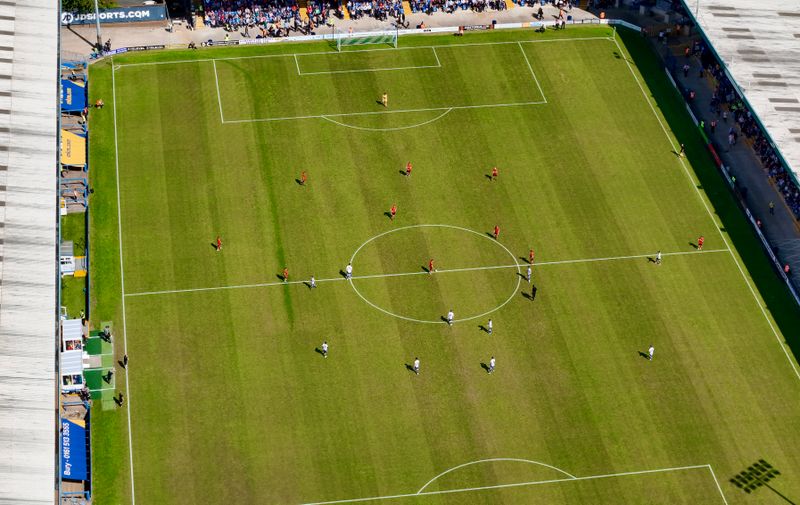
Preseason camps in American football and other summer sports weigh athletes before and after practice. The scale is being used as a hydration instrument rather than a body composition one.
Why weight change tracks fluid
Over a single practice, changes in body mass are almost entirely water. Tissue mass does not shift meaningfully in two hours.
So the difference between the pre- and post-practice weight approximates the fluid deficit, adjusted for whatever the athlete drank during the session.
That gives staff a number instead of an impression. Two athletes who both say they feel fine may have lost very different amounts.
How individual sweat rates vary
Sweat rate differs substantially between athletes performing the same work in the same conditions, driven by body size, fitness, acclimatization and genetics.
A uniform drinking instruction therefore overshoots for some and undershoots for others, which is the reason team-wide fluid rules perform poorly.
Repeated measurement builds an individual profile, and staff can then give a specific athlete a specific target expressed in bottles rather than in generalities.
What the morning weight adds
The second weigh-in, taken before practice the next day, answers a different question: whether the athlete replaced what they lost overnight.
A single hard session producing a deficit is unremarkable. The same athlete arriving lighter three mornings running is accumulating a deficit that training will not resolve.
Comparing to a stable baseline weight established at the start of camp is what makes the trend readable, since a single morning number means little on its own.
Why gaining weight is also flagged
An athlete who weighs more after practice than before has taken in more fluid than they lost, which is a warning rather than a success.
Overdrinking during prolonged exercise can dilute blood sodium, and the resulting condition is dangerous. It occurs in athletes following well-intentioned instructions to drink constantly.
Which is why the protocol looks for deviation in both directions. The scale is checking that intake matched loss, not that it was maximized.
The limits of the method
The measurement requires consistency to mean anything. Weighing in similar clothing, after using the bathroom, and on the same scale are all necessary.
It also says nothing about electrolyte losses, which vary between athletes independently of how much they sweat. A heavy salt loser is not identified by mass alone.
And weighing athletes daily has cultural risks in sports where body image is already a pressure, which is why the framing and privacy of the process are handled deliberately.